Filters and sorting
Sort by:

FILTRATION

Application
Place of application
Product type

EUROPIR® PRODUCTS AND SYSTEMS

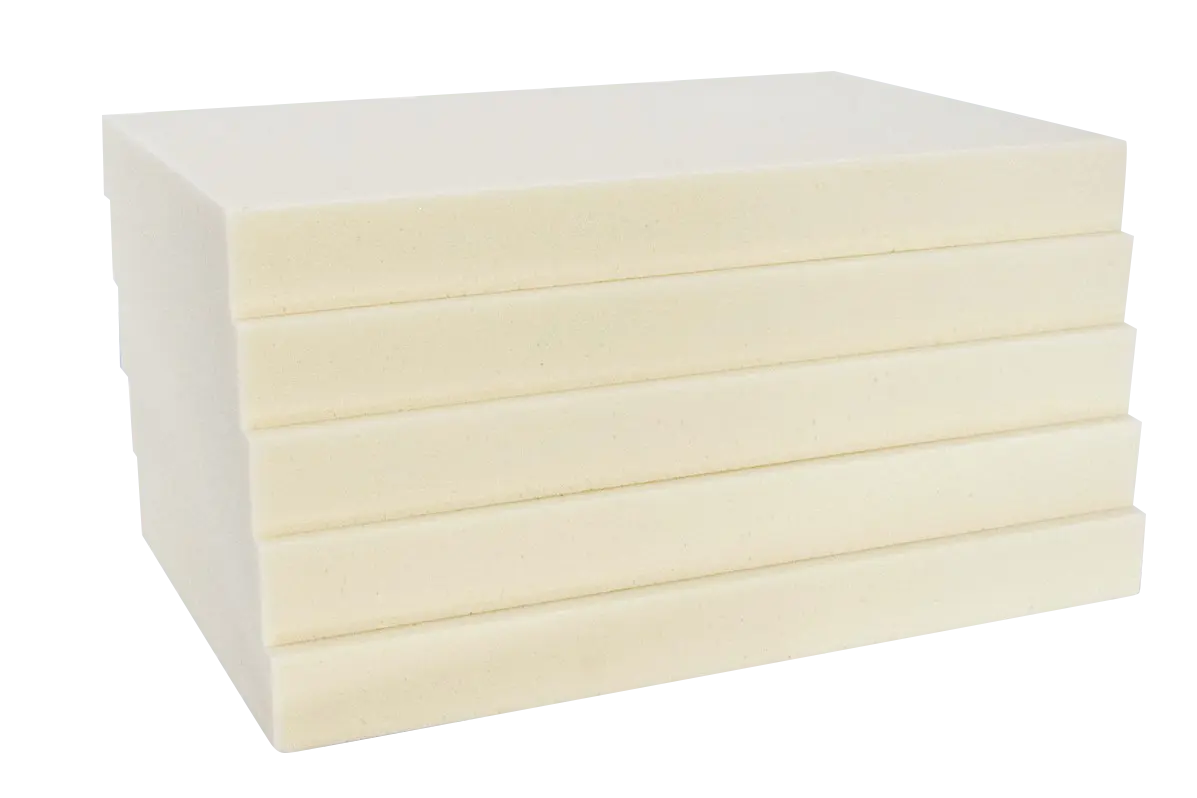
EUROPIR<sup>®</sup> ETICS board for wall insulation

EUROPIR ® ETICS board for wall insulation

Lambda 0.023–0.025 W/mK
Thickness 20–200 mm
Application wall, ETICS system
Compare
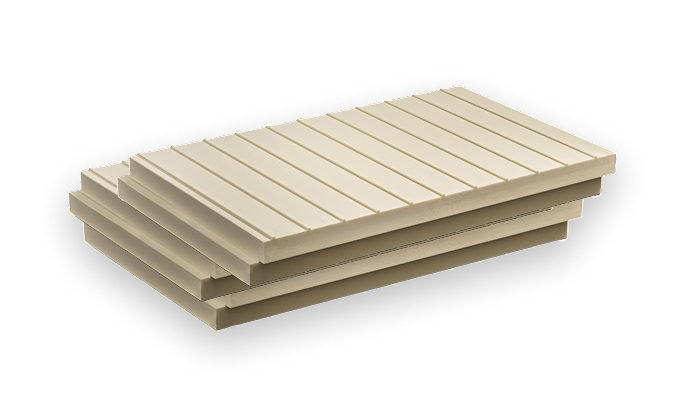
EUROPIR<sup>®</sup> STANDARD board for insulating ceilings, foundations and roofs

EUROPIR® STANDARD board for insulating ceilings, foundations and roofs

Lambda 0.023–0.025 W/mK
Thickness 20–200 mm
Application ceiling, foundation, roof
Compare
EUROPIR<sup>®</sup> CAPS caps for insulating mechanical connectors

EUROPIR® CAPS caps for insulating mechanical connectors

Lambda ND
Thickness 65, 67, 70 millimetres
Application external wall
Compare
EUROPIR<sup>®</sup> TUBE plugs for insulating mechanical connectors

EUROPIR®TUBE plugs for insulating mechanical connectors

Lambda ND
Thickness 65, 67, 70 millimetres
Application external wall
Compare
EUROPIR<sup>®</sup> KL fittings for flat roof insulation

EUROPIR® KL fittings for flat roof insulation

Lambda ND
Thickness Product made to order
Application flat roof, balcony, terrace
Compare
EUROPIR<sup>®</sup> SL sloping boards for terrace and roof insulation

EUROPIR® SL sloping boards for terrace and roof insulation

Lambda 0.023–0.025 W/mK
Thickness up to 600 mm
Application flat roof, balcony, terrace
Compare
Special shapes, insulation, rigid PIR foam fillings

Special shapes, insulation, rigid PIR foam fillings

Lambda ND
Thickness Product made to order
Application OEM, technical insulation
Compare
EUROPIR<sup>®</sup> DUAL board for insulating facades with clinker tiles

EUROPIR® DUAL board for insulating facades with clinker tiles

Lambda 0.023–0.025 W/mK
Thickness 50–200 mm
Application wall, partition wall
Compare

DO YOU HAVE ANY QUESTIONS?

See what customers ask about most often

The heat transfer coefficient is a parameter indicating the amount of heat that flows through one square metre of a partition per second when there is a temperature difference of 1 K (Kelvin) between both sides of the partition. The unit of the heat transfer coefficient is W/(m²·K). Lambda λ is the thermal conductivity coefficient, i.e. the property of a material that determines its ability to conduct heat.

The standard dimensions of PIR boards manufactured at PCC Therm, without cladding and with aluminium cladding, are 1200 x 600 mm. The boards are manufactured in thicknesses ranging from 20 mm to 300 mm in 10 mm increments, as well as in thicknesses of 25, 35, 45, 55, 65, 75, 85 and 95 mm. It is also possible to manufacture boards in non-standard thicknesses and dimensions.

Compressive strength is a mechanical property of a material that characterises its ability to transfer compressive loads. It is the compressive stress at which the material deforms by a specified amount (usually 10% of the sample height). According to the standard, compressive strength is determined by compressing the sample in a direction parallel to the surface of the board (in the direction of thickness). Compressive strength should not be confused with compressive strength.

The most important application of PIR boards without cladding is thermal insulation of external walls in ETICS thermal insulation systems. Boards without cladding allow for perfect adhesion of the adhesive to the entire surface of the board. This allows loads to be transferred from the outer layer to the building's supporting structure through the insulation board. In addition, unclad PIR boards are ideal for thermal insulation on the inside of structures in contact insulation of walls, ceilings or roofs. In such applications, the boards are usually fixed mechanically using expansion plugs or screws. Unclad PIR boards can also be used in seamless insulation. In such cases, the boards are welded together by welding the edges using a special electric PIR welding machine or by foaming the joints with a special single-component polyurethane foam.

The acronyms PUR and PIR stand for polyurethane foam and polyisocyanurate foam, respectively. Both foams are based on polyurethane chemistry, but PIR has a higher content of isocyanurate bonds in its macromolecular structure than PUR. The higher content of these bonds gives PIR better mechanical properties at elevated temperatures, as well as better fire properties. The isocyanurate contained in PIR is converted into carbon when exposed to heat. This process is called charring. The carbon produced by the decomposition of isocyanurate acts as a thermal barrier, effectively slowing down the further transfer of heat into the material.